Cosmos
The Centre on Social Movement Studies

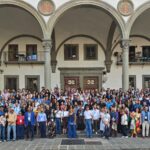
Donatella Della Porta’s talk at last week’s conference on Social movements in Intense times
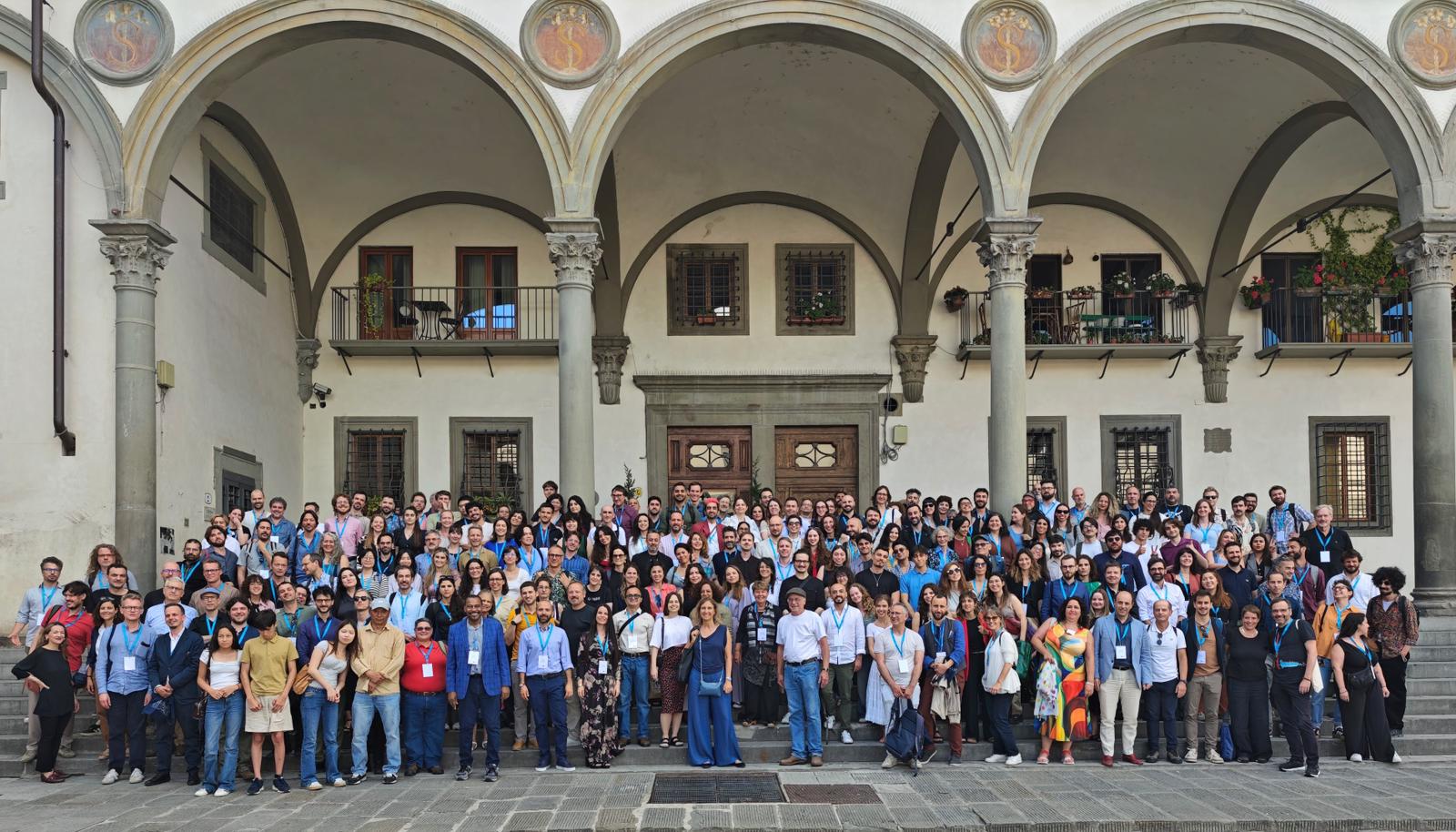
This is a huge honour, whose meaning and implications, I still have to elaborate. I am most grateful to all those who contributed to organize it, to those who have talked about my work this afternoon and to those who will be with me in the next two days. And, of course, to all those who helped, challenged, listened to, contradicted me in the last 70 years.
What I want to do now, to “reciprocate”, is to talk about the role that all of you had in the development of what George Steinmez defined as “tastes” within a broader “doxa”— located within a field like social movements, characterized by social commitment, theoretical eclecticism and methodological pluralism. I will do this through an (admittedly semiserious) autoethnography that will allow me to recognize my debits to many colleagues, seniors and juniors.
Social movement in intense times: an introduction
Are social movements normal actors in politics and society in settled times or extraordinary actors in intense times? Of course, both, as social movements tend indeed to adapt to different circumstances, using more or less grassroots organizational strategies, more or less disruptive repertoires of contention, and more or less radical identities. They are at times tamed and at times resurge; at times adapt to normality and at times challenge it. (#2)
Also, the distinction between settled and extraordinary times is an analytical one, that does not consider how the two temporalities might interact in the same historical period. For sure, concepts such as cycles, waves or tides of contention have for long pointed at the ways in which protests converge in time. Eventful temporality, transformative events, eventful protests are also concepts which point at how social movements do not only adapt to opportunities and resources but also trigger changes by producing their own opportunities and resources. (##2)
Empirically, moreover, while movements alternate visibility and latency, memories and legacy travel from one intense moment to the next by remaining active in the doldrums when organizational networks, repertoires of contentions and collective frames are remembered, nurtured and transmitted to next generations of activism.
In fact, research on social movements has been stimulated by intense moments—like the anti-colonial mobilizations in the 1950s, the ’68 complex cycles of protests including a revival of class struggle, the feminists innovative protests for reproduction rights in the 1970s, the international solidarity against apartheid in South Africa and against imperialist wars in the 1980s but also, and in an accelerated rhythm, the global justice movement in the years 2000s, the Arab Spring and the anti-austerity protests in the years 2010s, and the protests for a Free Palestine and against the Israeli genocide in the years 2020s. Additionally, each country has its own histories of intensification of mobilizations from below—as, e.g., the moments of radicalization I’ve studied when focusing attention upon political violence and repression, or the episodes of eventful democratization.
Nevertheless, as I have argued elsewhere, developed in a Fordist moment, social movement studies have tended to build mainly upon expectations of “normality”. As William Sewell noted, Fordist provided the basis for positivism with assumption of universalism, security, governability, and related empiricism, scientism, policy orientation and assumed value-free neutrality. What positivism had left out, and needed to be brought back in, was the contextualization of concepts and theories, their historicization (or what Michael Burawoy defines as provincialization). Against the search for laws, the need to consider conjuncture and agency emerged.
Reflecting on these general trends, I would say that my contributions to the field has been moved by some anchors that I find particularly useful to address intense times, characterized by poly-crises, critical junctures, paradigm shifts, revolts and resistance.
The main elements of a sort of dynamic approach I have quite consistently privileged in my career can be synthetized as follows: (##3)
In addressing moments of deep and fast transformations, I found in fact the search for robust causal mechanisms (as McAdam, Tarrow and Tilly called them) as more congenial with my “Weberian” historical sensitivity oriented to understanding rather than the search for correlations and causality oriented to explain (or even predict). So, in research on political violence or democratization processes, pandemic or genocidal times, I reflected on the relational, cognitive and affective mechanisms of fluidification of structures and consolidation of relations in a process of ruptures, vibrations and sedimentation (##4).
Auto-ethnography as a method
I have tried to develop these ideas in various writings – I admit, too many, as writing is for me a way of thinking and books seem to have always appeared to me the most congenial format to combine theoretical thinking and empirical materials.
What I want to do this afternoon with you is a sort of auto ethnography, oriented to single out how my own approach has developed in a processual, relational and constructed way. In doing this, I will point at how knowledge is dialectically constructed within broader constituencies, inheriting habitus but also challenging the dominant doxa. I owe the stimuli for thinking and doing research to a large number of colleagues, I met within the several institutions I went through—at the University of Catania, EHESS in Paris, Istituto Carlo Cattaneo in Bologna, EUI in Fiesole, Cornell University, WZB in Berlin, University of Florence, again EUI and finally SNS.
For reflecting on my journey, autoethnography seems an appropriate method as it allows to research personal experiences in order to understand broader social, cultural and political phenomena. It gives importance to the self but embedding it in history—as “the personal is political”. Through an emphasis on reflexivity, it appropriately points at the connection of relation, cognition, and emotions. It produces narratives with thick descriptions of the author’s experiences, building a tale of focused biographical experiences. Having collected life histories all my life, I also thought that it was time to apply biographical methods on myself, even if in an admittedly semiserious form.
Rebellious roots, rebellious field of studies
Anecdote: walking around a lake with a former phd student (now professor), Mayo tells me, “you know what distinguishes us, ddps? I though about it and it is our orientation to know in order to change the world”
If I reflect on my general attitude (having been at times accused of being “quite assertive for a woman…” or “too political for a detached scholar”….) and in fact my hope to change the world, I have to recognize my rebellious character, which has been nurtured in a specific space and time (##5).
Being born in Sicily did not set me apart from my generation which was socialized in other parts of the Western world. Sicily was undergoing fast changes, with cities and middle classes “modernizing” quite quickly. With secular parents, the solidarity of a sister and a brother, and some important others to learn from in my family circles, in my young years I could gain a significant degree of freedom.
Nevertheless, I believe that I absorbed from the South some aspects of a rebellious culture, by growing up with the evidence of how internal forms of colonialism had made for the exploitation of the South which was not per se a periphery but was made such through subjugation. Direct experiences of territorial inequalities have produced, along my life, a sense of identification with those I saw fighting against injustice.
Also, the South meant familiarity with a specific form of resistance: a bit peasant rebellion and a bit anarchist, radical and spontaneous. In this sense, I rebelled against the ideas of a backward syndrome, an amoral familism or the attribution of “barbarism” Antonio Gramsci has considered as part of the “quistione meridionale”.
The effects of space are rooted in specific times. My rebellious sense was certainly fueled by being a teen in a moment of intensified protests. As the long ’68 arrived a couple of years later in the South and I entered high school in 1969, my school years were years of intense protest, 24H24 activism, meetings and street politics, enhanced emotions and focused cognitive efforts. As I have learned when studying generations in movements, movements generations are much shorter than statistical ones. In my experience, my generation was the one who lived the “sous le pavé, la plage” slogan directly, finding in the comrades & friends “bread and roses”. Not by chance, still in my teens, my friends and comrades called me “our Rosa”, as in the fierce debates among comrades, between Marx and Lenin, I chose Rosa Luxemburg as my main inspiration.
This might explain why, for me as for other scholars with similar rebellious experiences, studying movements was indeed a rebellious act. Not only because political scientists considered them as marginal, even folkloristic phenomena when compared with elections, and sociologists often as just epiphenomena of social structures, but also because many of us were studying social movements not out of disillusionment with rebellion, but rather to help transforming the world.
The first building block for social movement studies in intense time is, for me, the commitment to address real problems with some assertiveness and a lot of “optimism of the will”. This is what makes our work worth and even pleasurable.
Eclectic formative years: hybridizing approaches in social movement studies
Anecdote: at the conferring ceremony of the ECPR Mattei Dogan Prize, in Rekjiavik I said, “I had the good fortune of uncomfortably sitting in-between and building bridges across theories, fields, disciplines, methodologies”.
Migrants are cosmopolitans who, by definition, bridge different worlds. They connect across divides. Moving between Paris and Fiesole, with stops-by in Bologna and Ithaca N.Y., has been the best way for me to learn about the then developing field or social movement studies but also to be socialised to different approaches in the field trying to blend them, rather than siding with just one of them. (##6)
As I met with Alain Touraine and his Cadis group, doing a DEA at the EHESS, I was attracted by the broad picture of social movements as main historical actors, driving societal transformations. The search for the new main (left-wing, for me) class actor in a vastly transforming context was what I took with me as a main concern. Living literally on the main route of the protest marches in Paris, between Bastille and Republique, I could watch social movements life from my balcony and participate in them. Not by chance, I left Paris with a gift from my journalist roommate and fierce ’68er’, Yves–his red scarf with an original hole in it made by a tear gas bullet during the Nanterre revolt.
In and immediately after Paris, I was in search for lenses that would allow me to really understand how big historical transformations were affecting and affected by social movements. I found them in the conceptualization of political opportunities, as connecting social movements and institutional politics with sensitivity to conjunctural turns and cross-country specificities: in the resource mobilization approach, rooted in organizational studies and, therefore, giving weight to the role of organizing, but also the collective framing, as rooted in the symbolic interactionism, which allowed me to also tackle the micro-dynamics of a sociological phenomenon. Rosa Luxemburg remained however with me, with her special attention to how action produces organization and identities,
In Bologna, rightly located between Paris and Fiesole, I worked in a research project on political violence funded by the Regione Emilia Romagna to the Istituto Carlo Cattaneo in the context of the reaction to the right-wing massacre which killed a hundred of citizens at the Bologna central railway station in August 1980. It was also then a learning process about how to do research under the pressure of understanding dramatic historical events. Working with historians and lawyers, judges and human right defenders, I learned there also the value of combining different disciplinary approaches in order to understand, but also address, complex challenges.
The attention to the intersection between macro-meso-micro is my main contribution to the analysis of political violence as born from interactions between movements, counter-movements and the state, grown through organizational transformation and competition, affecting networks of militants—with whom I shared not only generational experiences, but also some hopes and aspirations.
Those reflections further developed as I engaged in my PhD at the EUI, with a supervisor like Philippe Schmitter, from whom I learned not only an “ecumenical” supervisory styles (considering supervisees as adult and independent scholars, you’d there to support—and admire and love…), but also, more than he has ever admitted, from his attention to the role of agency and contingency in times in which structures break down.
In a similar direction, I learned, at the same time, to think big in analytic terms and stay empirically focused from another unique mentor and friend, Sidney Tarrow, who invited me to spend a term at Cornell University–with two main challenges, I managed to overcome: surviving the winter (with a Sicilian body made for lowest temperatures of +23C having to deal with the -32C in Upper New York State), and reading all what had been written on social movement studies until then (a task I accomplished with the only exception of 5 references). What I learned from Sid were also two lessons I tried to remain loyal to along my life: a) context matters; b) listen to young scholars not just as an act of generosity, but also because acknowledging their brilliant minds and fresh knowledge contributes to our collective enterprises.
These years were enriched by and rooted in the consolidation of the field of social movement studies through the developments of networks of network around international conferences, research projects and collective books which fueled increasing interactions between European and US scholars—among them, with Sidney Tarrow, John McCarthy, Doug McAdam, David Snow, Mayer Zald, Verta Taylor, Bert Klandermans, Dieter Rucht, Hanspeter Kriesi, Alberto Melucci and many others—with Mario Diani and I as the “juniors” in this group (and me as the almost the only woman in a quite masculine, although sort of kind, field). As a network of networks, also social movement studies built upon the connections we have been able to build across methodological and disciplinary divides, bringing “back in” capitalism (with Jeff Goodwin) and emotions (with Jim Jasper), “bridging” social movement studies and studies of revolutions, democratization, ethno-nationalism… (##7)
Finally, important lessons I learned as I connected academic knowledge and political commitment as a sociologist in the making were about two central strategic issues I had then an imprinting about: social scientists have a duty to fight for peace and resisting wars, and they have a duty to fight against the complicity of their own institutions being it in engaging in military research or in supporting apartheid as in South Africa. In Paris, Fiesole and Cornell, the intense years at the beginning of the 1980s included joining protests against militarization, capitalism, racism and patriarchate. As I supported the shantytowns movement at Cornell, calling for a boycott of apartheid’s academic institutions there, I felt Sid on my side (as he warned me against smoking pot with undergraduates, and smoking anything in general, but never against risking being arrested for protesting on campus).
In sum, the lesson of my academically formative years has been the value of theoretical eclecticism applied on empirical knowledge as a way of breaking borders and improving the understanding of historically most relevant processes which saw social movements at their core.
Comparing by building ties: my postdoctoral nomad years of Grace
Anecdote: A young professor invites me to Venice to give a talk in the most beautiful hall on the Grand Canal I have ever lectured in. At dinner he asks me, “do you remember when you told us, students of the Collettivo Politico of the Political Science Faculty of the University of Florence, that, ‘one does not only fight battles one knows she is going to win?’. I answered, ‘Duccio, I do not remember it, but I consider it very genuinely reflecting my own take on the world’
In the late 1980s and early 1990s, my postdoctoral years have been embedded in a (longish) time spent first at the EUI, then at WZB in Berlin and a return to Florence, which was not initially but was to become then my home town. In my memory, these are also nomadic years (as I had what I later considered the good fortune of finding recruitment in the Italian university completely closed when I got my PhD in 1987, which allowed me to spend time abroad and then (at the beginning of the 1990s) to come back to Italy directly as associate professor at the university of Florence. (##8)
Before moving to Berlin, my very first experience of what is nowadays called “postdoctoral” life has been in a research project at the EUI on political corruption and organized crime I engaged in with a most influential and generous sociologist, friend and mentor I could hope for, Alessandro Pizzorno. Sandro had a tremendous impact on me and on another (then) young scholar, Alberto Vannucci, with whom I worked often and well on the “bad side” of politics. Among the many important lessons I have learned from Sandro, the one that theoretically affected me the most is the importance of collective identification for the very definition of any “interest”; the importance of norms but also their malleability; the importance of recognition above simplistic homo economicus expectations. Methodologically, from him I learned to listen: listen to interviewees, listen through participant observation of various kinds, listen to heterogeneous stimuli, and, most importantly, listen to the knowledge of junior colleagues and non-academics. It has been also thanks to Sandro if I could engage in an important comparison on protest policing (where worked with Herbert and met Olivier Fillieule and, later on, Abby Pederson), singling out the role that police knowledge (as the assessment by policemen of their role and expectations on them) played in repression.
My early 1990s were turbulent years—with Herbert, we arrived in Berlin in 1988 when it was an enclave divided in East and West but with no time to embrace the claustrophobic climate of a city that was at the same time still imprinted by an authoritarian past but also transformed from the young people who avoided the military service if the moved to Berlin. As the wall broke down in 1989, my long postdoc in Berlin was then a learning process about the intensity of historical moments, as well as the centrality of comparison as an heuristic tool (something important to note now that repressive turns in Germany have outlawed the very essence of comparison in the weaponization of the struggle against anti-semitism in a bigot message about the unicity of the Nazi genocide in attempt to silence the protests against the genocide in Gaza).
At WZB, my macro-meso-micro frame was enhanced in the comparison of political violence in Italy with the parallel process in Germany, which ended up in my first important book in English, Social Movement, Political Violence and the State, that I manage to submit notwithstanding my copyeditor kept sending the corrected chapter to Berlin, German Democratic Republic.
While moved also by sentimental reasons (from a German grandmother to a German husband-to-be), the comparison was heuristically most telling in pointing at the connections between the context and the perception of it.
Living in Berlin in November 1989 attracted not only my attention on eventful protests as transformative triggers, but also to the theorization of how long durée interacts with eventful temporality. With Herbert as mentor and translator, I learned the importance of historically dense comparisons in which countries are not just sets of variables, but deeply rooted institutions (in the normative sense of historical institutionalism). With him, I continued to work and learn, from his immense historical knowledge and intense intellectual curiosity, which stimulated me when we worked together, being it on protest policing and transnational movements.
Historically rooted comparisons which try to understand when agency breaks structures has been a “taste” I could nurture when I became a young associate professor of political science (and soon full professor) at the university of Florence. There, two colleagues and friends, Leonardo Morlino and Mario Caciagli, sadly no longer with us, helped me in practicing the logic of comparison that they had brilliantly applied in their own work. It was in our conversation and co-teaching that I came to appreciate the specificity of different comparative logics, but also the possibility to put them in dialogue with each other.
It has been at the University of Florence, moving from associate to full professor, that I collaborated in various comparative projects financed by the EC funding programs—from the TEA project on environmentalism to UNEMPOL on unemployment—which also found an anchorage in the first research network I built and named GRACE, the Gruppo di Ricerca sulla Azione Collettiva in Europa, with Massimo Andretta, Lorenzo Mosca, Simone Baglioni, Maria Fabbri, Sarah Valenza, Herbert Reiter and many others in Florence, but also with Chris Rootes, Mario Diani, Marco Giugni, Dieter Rucht as friends and partners.
In sum, my lesson from this period has been that comparing is a fundamental instrument for moving from description to interpretation, avoiding the illusion of grand theories, I found never attractive.
Critical Europeans: helping building social movement studies in Europe
Anecdote. When Massi said, in 2001, more or less, “meno male, global protests started anew; I was afraid we had to recycle ourselves into charity studies…”.
Let’s reiterate: Generations differ broadly in their experiences with intense times. My personal critical juncture—moving to EUI in 2003–overlapped with a new massive wave of transnational mobilization that addressed international organisations, their democratic deficit, colonialist legacy and neoliberal ideology, while showing the way to resist them. (##9)
In 2002, I was recruited at the EUI in a chair on the sociology of citizenship (totally by chance, as I only noted while waiting for the recruitment panel to interview me that I had to prepare a 10 minutes opening statement, which I did only thanks to a delayed schedule). When I entered into service in 2003, the global justice movement, still in full swing, raised the passion of a large cohort of young scholars who came to EUI to study contentious politics with me.
Confirming the centrality of a relational approach, the movement of movements, as it was called then, focused attention on the need to build a global resistance and, relatedly, to form coalition across social movements, which had developed in a fragmented way in the previous years as the fall of the Berlin Wall had challenged long lasting ideologies. The financing by the EU of the DEMOS (Democracy in movement and the mobilization of the society) project allowed me to develop my comparative perspective in two connected directions. First of all, it made me realize that the relevance of the transnational levels of power challenges any assumption of countries as independent units, bringing with itself the acknowledgement that reflections on democracy have to address the increasing power of unaccountable international powers. Second, and at the same time, it showed that this did not mean that the nation state level was overcome, as various territorial levels of governance interacted. Investigating the emergence of a new actor bridged in my thinking the Pizzornian concern with recognition with the Luxemburgian taste for identities emerging in action—through processs in which relational, emotional and cognitive mechanisms interact.
Together with the Demos project, what helped me in the critical European turn was a department, at EUI, where I could be colleague of and collaborate with Philippe Schmitter and Sandro Pizzorno as well as Michael Keating, Colin Crouch and Laszlo Brustz, who stimulated me in addressing structure and agency, class-based and territorial identities. Yves Mény, as president of the EUI in my first years there, was for me an example of how to build institutions through visions, but also listening, discussing disagreements and creating commitments.
This attention to expand beyond the boundaries of “orthodox” social movement studies characterised also my choices as a supervisor. My experience with almost 70 supervisees and some 30 post-docs taught me several lessons, among which the importance of an international environment as a trigger to learn about different countries’ histories and academic cultures from the young, brilliant and courageous junior scholars I had the fortune to work with. This proved most important when with Michael Keating (he as head of department and I as dean of graduate studies) engaged in the challenging but rewarding task of transforming an unpopular compulsory course into a constructive space for debates through the development of the very conceptualisation of methodological pluralism.
Still at EUI, the next step after DEMOS has been Mobilizing4democracy, my ERC advanced scholar grant that allowed us to squat Villa Pagliaiuola (a EUI property too far away from the Badia for most established EUI centers) and populate it with PhD and post-doctoral researchers engaging in what was to become the Center on Social Movement Studies, Cosmos (as well in pizzas, drinks, cinemas and other performances). With Lorenzo Bosi, Lorenzo Mosca, Lorenzo Zamponi, Frank O’Connor, Markos Vogiatzoglou, Leonidas Oikonomakis, Eduardo Romanos, Tiago Fermandes, Massimo Andretta, Hara Kouki, Matteo Cernison, Kivanc Atak, Andrea Felicetti, Pietro Castelli, Stefan Malthaner, Kostantinos Eleftheriadis, Giorgia Mavrosi, Alice Mattoni, Salvatore Sberna, Chiara Milan, Phil Ayoub, Philip Balsinger, Ayca Cubucku, Nai Rui, Xabier Itcaina, Raffaele Marchetti, Gianni Piazza, Chares Demetriou, Julia Rhone, Daniel Ritter, Daniel Monterescu, Diego Muro, Claudia Verhoeven, Joseba Fernandez, Alberto Vannucci, Mate Tokic, Babak Rahimi and Herbert, of course, Villa Pagliaiuola was a proof that thinking hard and having fun often actually feed each other.
At EUI, my life as supervisor and scholar was enriched while mentoring (and learning from) brilliant colleagues as Luisa Chiodi, Julien Talpin, Federico Silva, Lasse Lindekilde, Pierre Monforte, Louisa Parks, Nicole Doerr, Tiago Fernandes Javier Alcalde, Alice Mattoni, Anja Rocke, Giorgia Mavrodi, Elena Del Giorgio, Annika Zorn, Stefania Milan, Christophe Voineau, Sonia Piras, Jan Zutavern, Daniela Piccio, Mayo Fuster, Tim Peace, Grzegorz Piotrowski, Sophie Bossy, Federico Rossi, Roni Dorot, Catriona Roberts, Emin Poljarevic, Matteo Cernison, Helge Hiram Jensen, Jana Warkotsch, Leila Hadj-Abdou, Teije Donker, Kivanc Atak, Lorenzo Zamponi, Donagh Davis, Markos Vogiazoglou, Konstantinos Eleftheriadis, Bogumila Hall, Marion Lecoquierre, Frank O’ Connor, Lorenzo Cini, Leonidas Oikonomakis, Joldon Kutmanaliev, Didem Oral, Hugo Leal, Anna Subirats, Daniela Chironi, Martin Portos, Parthena Xanthopolou, Juan Masullo, Oleg Zhuravlev, Mariana Mendes, Manes Weisskirchen, Julia Rone, Riccardo Chesta, Jan Eric Berntzen, Jonas Draege. (##10)
Main lesson learned in these years is that knowledge is a collective endeavour and that we need to facilitate translation across epistemological and methodological barriers.
Cosmic aspirations: the (most) momentous years
Anecdote: A colleague at EUI once said that, “when your term there is over, you feel like you’ve been chased out of heaven”. This was definitively not the case for me as I had rather the good luck that my short geographical journey from Badia Fiesolana to Palazzo Strozzi brought about the unique opportunity and challenge to build a department from scratch
In the years between the mid-2010s and the mid-2020s, once again, my personal critical juncture overlapped, and was affected, by historical transformations. At the personal level, the Scuola Normale Superiore, with its focus on merits rather than profits, as well as the development of a doctoral program and the opportunity to support with grants students coming from all over the world (rather than collecting fees from those who can afford it), allowed me to open relations and knowledge from a mainly European level into a global one, teaching to and learning from students coming not only from all over Europe but also from the African, Asian, Americans and Australian continents. (##11)
This pushed me to address, within a contentious politics perspective, fields of research in capitalism, colonialism, imperialism, racism, as well as environmental, feminist, labour and peace studies, from which social movement studies could learn but also contribute to. Even if within the limits set by neoliberal policies in HE and the small size of a special school of excellence, in comparison with the total precarity of academic labour at EUI, SNS also gave me the opportunity to think at Cosmos not only as outbreak, but also as sedimentation into something durable, cohesive inside but also inclusive towards the outside, dynamic to the extent that, as Jim Jasper wrote once, after visiting us, “there are more interesting things ongoing at Cosmos than any human being—but Donatella–is able to attend”.
Actually, SNS was my (‘till now) biggest challenge. In a school of excellence with more than a century long tradition in hard sciences and humanities I was asked to build a faculty of political and social sciences, and even given the means to do it. For this chance I have to thank a director, Fabio Beltram, world leader in Physics of Matter, but also institution builder with no fear for innovation, who, when I asked how much funds would I have, told me, “as much as you need to build a faculty we can be proud of.” I think some of what fueled this opportunity was contingency—such as an instinctive reciprocal sympathy. But its realization was made possible by an institutional culture in which I could rely on the trust and support of a vice-Director, Andrea Giardina, renowned for his studies in Roman history, a most committed director such as Luigi Ambrosio, egregious Mathematician, and my two co-deans, Andrea Ferrara and Gianpiero Rosati, with whom we faced many battles (including the pandemic) with reciprocal solidarity. These have been and are colleagues I could rely upon when I had to navigate the many dilemmas that emerged, from the age balance to the disciplinary focus, the in/compatibilities in terms of disciplinary coverage, the relations between Pisa and Florence (still characterized by the tensions Dante Alighieri wrote about).
As my rule of engagement was to build a faculty (that grew from 1 to 15), I was also forced to think big, connecting contentious politics with all the range of political science and sociological disciplines (economic sociology, cultural sociology, environmental sociology, gender studies, political communication, political economy, colonial studies, international relations and so on). Spending ten years in recruiting brilliant colleagues, I was lucky to be able to attract to SNS colleagues such as Lorenzo Mosca, Alice Mattoni, Mario Pianta, Guglielmo Meardi, Hans Jorg Trenz, Emanuela Lombardo, Luigi Pellizzoni, Lorenzo Bosi, Lorenzo Zamponi, Martin Portos, Marco Deseriis, Chiara Milan, Daniela Chironi, Cesar Guzman Concha, Elena Pavan, Andrea Felicetti, Andrea Pirro, Eugene Nulman, Federico Alagna and many others.
As multiple crises developed at accelerated speed in the real world, the urgent need to understand what was going on also took me to try to combine research in social movements with those on deliberative democracy and political parties, but also capitalism, health studies, climate studies, tourist studies, genocide studies, war studies in order to understand the causes of those crises. This further convinced me of the need to look at protests in intense time as endowed with specific characteristics. Being it the Arab revolutions and the antiausterity protests of 2011, their long wave in Turkey or Brazil in 2013, the abrupt long Fall of 2019 in Lebanon and Chile, Catalonia and Hong Kong, the spreading of the Black Lives Matter in 2020 or since 2023 the protests for a Free Palestine (which represented in many countries the biggest tide of protest ever), the revivals of student protests and the labour struggles, I have consistently looked for concepts and theories that could help understanding how revolts spread against all odds.
As Cosmos became an official laboratory, together with the construction of an observatory on protests, this “institutionalization” also brought about an expansion of the empirical base but also of the theoretical (relational, processual and constructed) perspective that Cosmos could develop upon, with 15 colleagues in the faculty, as well as other almost 70 supervisees and 30 mentorees to work with. This could happen thanks to the trust in a just born PhD program by Carlotta Caciagli, Ester Sigillò, Elias Steinhilper, Haris Malamidis, Huda Moshin, Alexandra Ana, Galina Selivanova, Aliaksandr Ruzhantsou, Raffaele Bazurli, Filip Balunovic, Bartek Goldman, Jonas Gunzelmann, Ivan Stefanovski, Larissa Maier, Linus Westerhausen, Stella Christou, Karlo Kralj, Mans Lundstedt, Federica Stagni, Eva Fernandez, Johanna Hoffstetter, Giada Bonu Rosenkranz, Anastasia Barone, Carla Mannino, Sophia Wathne, Angela Adami, Rosa Burc, Silvia Carenzi, Valeri Saenko, Sarah ElMasry, Maria Nicola Stragapede, Laura Mendoza, Tobias Reinhardt, Batuhan Eren, Alessandra Lo Piccolo, Lorenzo Velotti, Giuseppe Cugnata, Giuseppe Platania, Maria Chiara Franceschelli, Ghadir Abumiddain, Stefano Filippini, Luigi Schiavo, Florian Carl, Lydia Karazarifi, Anders Svensson, Rosario Freire, Ismail El Mouttaki, Noemi Cipriano, Selen Sarikaya Eren, Jorinde van der Horst, Giuseppe Lipari, Alice Franchini, Fahir Yumukov, Jimmy Matar, Nerea Montejo Lopez, Laila Sitta Aboha, Eduardo Alvares, Olivia Burchietti, Julius Strunk, Eva Lotte Schwartz, Franca Marquardt, Daniel Calò, Aisha MacDougall, Andrei-Ioan Marin Balulescu, Sofia Del Vita, André Queiroz Cândido De Carvalho Marinha. And I also learned by the excellent work with post-docs—among which Marco Antonelli, Niccolò Bertuzzi, Paolo Gerbaudo, Francesca Frazzetta, Rossana Tufaro, Hadeel Karkar, Arees Bishara, Delal Aydin, Anna Lavizzari, Sevgi Dogan, Alba Arenales, Rossella Ciccia, Jochen Kleres and the many former PhD students who became collaborators.
What I bring with me is that, in Gramscian times of monsters, dense in contingency and agency, social movements have to trigger momentum in order to break structures.
Concluding: Cosmos as a legacy
In sum, I grew up with social movement studies as a very fast expanding field, taking part (and pride) in their successes as well as their challenges, their twists and turns, their consolidation and controversies. This does not mean that the field was without internal conflicts, selectivity and biases—as any other fields—but it remained open thanks to the continuous evolutions of the very object that we focused our attention upon, and which in fact contributed to the academia new generations of scholars with specific commitment, interests and tastes. (##12)
While exploring other topics in my research and teaching, I have remained most attached to social movement studies, for several reasons. First of all, I found most researchers who addressed this topic congenial as human beings, often moved by a sincere interest in improving the world. Their experiences of social and political commitment have often been criticized by scholars addressing more mainstream topics, but I found instead that they proved most fruitful in developing the cognitive framework as well as in improving the affective climate among scholars in the field. In a moment in which “neutrality” is preached as a requisite of scientific value, it is most important to claim, with Michael Burawoy, the value of a critical view of science as addressing societal problems which are by no means “apolitical”,
Moreover, political circumstances dictated constant theoretical innovation with a propensity for theoretical cross-fertilization. Emerging through a bridging of different disciplinary approaches – from symbolic interactionism to organizational sociology, from sociological theory to political science – social movement scholars constructed a toolkit of concepts and hypotheses by combining inputs from different fields of knowledge. This trend broadened over time, from sociology to political science, extending to include geography, history, anthropology, normative theory, law and (even) economics, as each new burst of contentious politics brought new generations into social movement scholarship. (##13).
These are positive legacies for Cosmos to continue to build upon but also innovate. A most important quality of Cosmos is its cosmopolitan composition. I feel very proud to have been able to mentor junior scholars coming from more than 40 countries, including Italy, Spain, Portugal, Cyprus, France, Switzerland, Austria, Germany, Poland, Czech Republic, Hungary, Rumania, Albania, Bulgaria, Serbia, Croatia, Macedonia, Russia, Byelorussia, Kirghizstan, United Kingdom, Ireland, Denmark, Norway, Finland, Philippines, Columbia, Argentina, Brazil, Bolivia, Chile, Morocco, Egypt, Turkey, Bahrein, New Zeeland, Lebanon, Iran, Kurdistan and Palestine.
From my more than 130 PhD students and almost as many post-doctoral mentorees, I have learned that the new ideas emerge from the interactions between fields, geographies and generations. As new challenges and opportunities continue to emerge for social movements and social movement scholars. These are some most important lessons that Cosmos will continue to address in the future, with theoretical eclecticism, empirical pluralism and commitment to justice and peace.
Journal Article - 2026
Journal Article - 2026
Journal Article - 2026
Edited Volume - 2026
Journal Article - 2026
Journal Article - 2026
Monograph - 2025
Journal Article - 2025
Journal Article - 2025