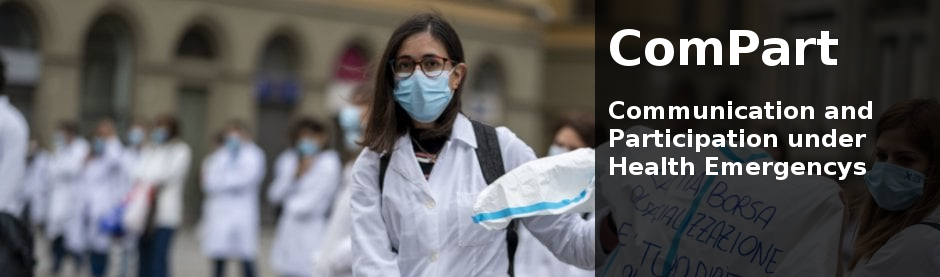
The project investigates how mass media, institutional actors and citizens shape communication and participation under Covid-19 emergency.
The project TraPoCo “Transnational Political Contention in Europe” contributes to the advancement of research on mobilisation and contestation practices (protests, legal activism, strikes, advocacy) of actors such as social movements, activists, civil society organisations, trade unions, etc. in transnational political arenas on issues related to European integration.
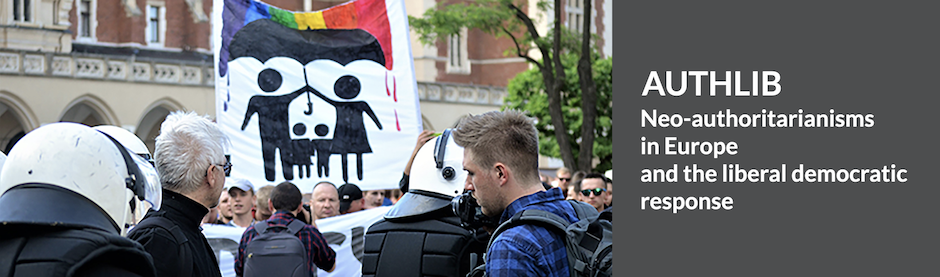
Neo-authoritarianisms in Europe and the liberal democratic response (AUTHLIB) is a multidisciplinary project that aims to explore the varieties of neo-authoritarian, illiberal ideologies in Europe, their social, psychological and historical causes, their organisational background and their political implications.
"GOLDSTEIN – Debunking Political Uses of Denialisms and Conspiracy Theories in EU" addresses the political uses of new denialisms and conspiracy theories have played a crucial role in the European Union through an unitarian conceptual and analytical framework that can offer a more comprehensive critical explanation of these phenomena.
"Inequalities: Social sustainability and gender inequalities: culture, politics and economy" explores with a mixed method approach gender inequalities (their perception and definition by the participants) in three different but interrelated fields (cultural, political and economic), rarely taken into consideration simultaneously by scientific research: in particular in academia, business companies and political participation & mobilization.
FIERCE aims at providing sound theoretical and practical knowledge and tools to revitalize alliances between the feminist movement, civil society and political decision makers in a context of growing social inequalities, political disaffection and strengthening of populist radical right anti-gender actors and discourses.
ECS_Euro Project takes up the question of how new approaches can be identified at the local scale vis-à-vis the longstanding challenges for Europe to establish cross-border social cohesion and cooperation in particular regarding the social fields of migrant rights, housing and care work.
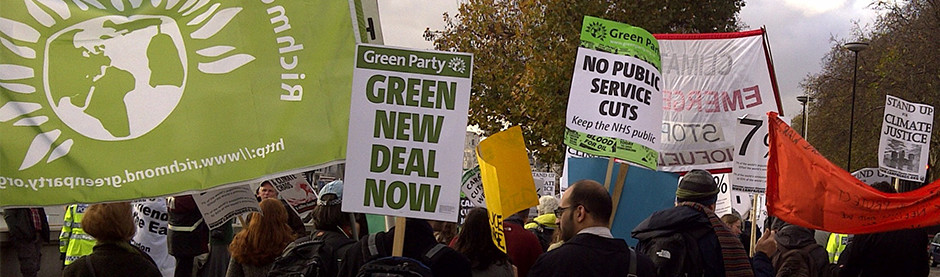
The project analyses political conflicts over climate change at local, national and transnational levels, looking at both institutional actors and civil society actors.
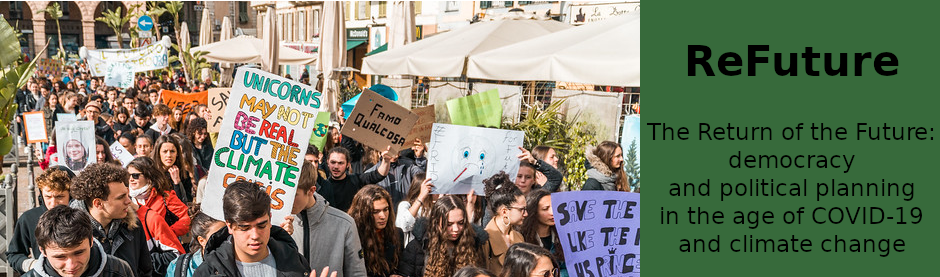
ReFuture investigates the comeback of the need for political planning and its role in revitalising democratic governance. After decades in which politics was mainly interpreted as day-to-day administration, an era of impending emergencies requires to build new capacities: thinking about possible futures is key to maintaining democracy’s ability to act and plan vis-à-vis epochal challenges like climate change or the COVID-19 pandemic. The decline in the planning capacity that has characterised Western democracies since the end of the 20th century appears to be replaced by a resurgence of the need for political planning, in many forms, including institutional responses in the form of the Next Generation EU (NGEU) programme and increasing focus of grassroots civil society actors both on proposing alternatives to institutions and the public, and on practicing such alternatives in prefigurative experiences.
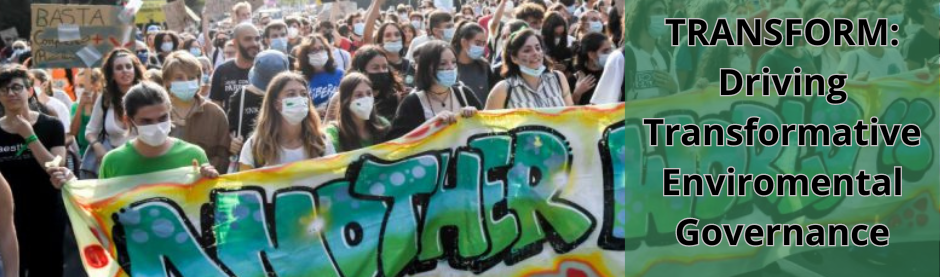
The TRANSFORM project will investigate how civil society actors drive change towards transformative environmental governance. Current scholarship claims that such a change is a crucial element to improve our responses to climate change, biodiversity loss and the host of daunting challenges these pose. This viewpoint is shared by key actors in global environmental governance as well as civil society actors (CSAs), and all converge in underlining the need to shift away from the existing system of environmental governance rooted in understandings of the ‘environment’ as a set of resources. While emerging work on transformative environmental governance focuses on the fundamental elements that will characterise this governance model, there is less detail available about how such a transformation will come about. Although CSAs are seen as key drivers of transformative change, questions about how their actions will drive change remain.