Cosmos
The Centre on Social Movement Studies
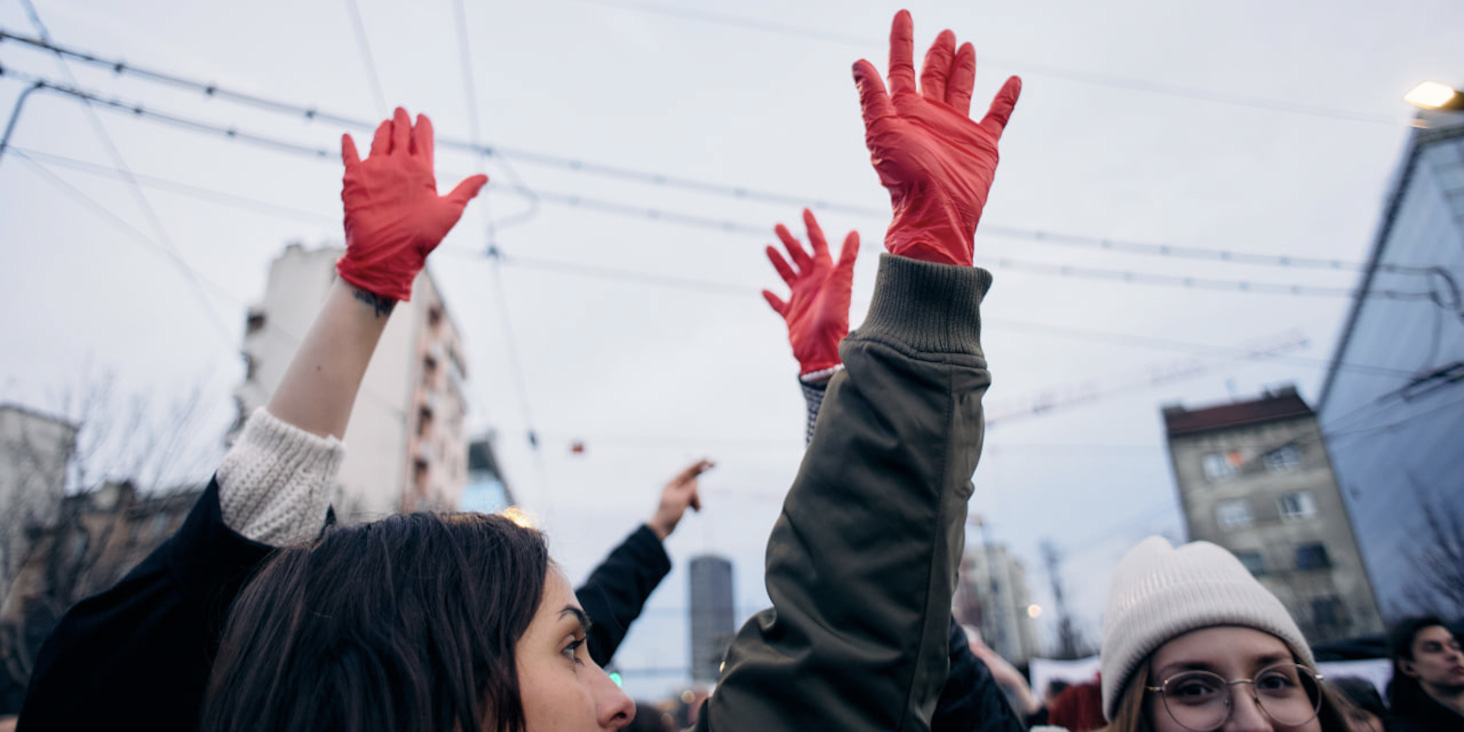
In a watershed moment in Serbia’s history, Aida Kapetanović and Filip Balunović will examine the wave of protests that has been unfolding in the country since November 2024, driven by student movements.
(Cosmos Roundtable is scheduled in Palazzo Vegni, Aula 2N)
Serbia is experiencing its largest-ever protest movement since 2000. Led by university students and joined by people of all walks of life, the protests were sparked by the collapsing of the roof of the renovated railway station in Novi Sad in November 2024, which resulted in the deaths of 15 people. The student-led demonstrations transformed into a massive movement against the authoritarian rule and widespread corruption in the country, which did not stop even after the resignation of the PM. Mass anti-corruption gatherings have been organized in the Serbian capital and in almost every town across the country, demanding change and accusing the President Aleksandar Vucić’s government of fostering corruption and authoritarianism. The students leading the protests advanced four and a 20% increase in the budget for higher education. The student-led protests, which triggered protest occupations of university faculties across the country, have become the biggest challenge to Vucić government since he came into power in 2012.
Journal Article - 2026
Journal Article - 2026
Journal Article - 2026
Edited Volume - 2026
Journal Article - 2026
Journal Article - 2026
Monograph - 2025
Journal Article - 2025
Journal Article - 2025