Cosmos
The Centre on Social Movement Studies

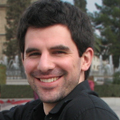
Stefan Malthaner is Assistant Professor at the Department of Political Sciences and Government at Aarhus University, Denmark and is investigator in the EU funded research project “PRIME” (Preventing, Interdicting, and Mitigating Lone Actor Extremist Events). Previously, he was Marie Curie Fellow and Max Weber Fellow at the European University Institute (EUI) in Florence, Italy, researcher at the Institute for Interdisciplinary Research on Conflict and Violence (IKG) in Bielefeld, Germany, and a member of the Research Group “Micropolitics of Armed Group” at Humboldt University Berlin. He has done extensive field research on militant movements and armed groups in Egypt, Lebanon, Germany, Great Britain, and Peru, with a particular focus on the relationship between militant movements and their social environment as well as on processes of conflict escalation and transformation. Among his publications are “Mobilizing the Faithful: Militant Islamist Groups and their Constituencies” (Campus, 2011); “Dynamics of Political Violence” (Ed., with Lorenzo Bosi and Chares Demetriou, Ashgate 2014), “Radical Milieus” (Ed., with Peter Waldmann, Campus, 2011), and “Control of Violence” (Ed., with Wilhelm Heitmeyer et al., Springer 2011). He holds a PhD in Sociology from Augsburg University, Germany, and a M.A. in Political Science, Sociology, and International Law from the University of Bonn.
Journal Article - 2026
Journal Article - 2026
Journal Article - 2026
Edited Volume - 2026
Journal Article - 2026
Journal Article - 2026
Monograph - 2025
Journal Article - 2025
Journal Article - 2025