Cosmos
The Centre on Social Movement Studies

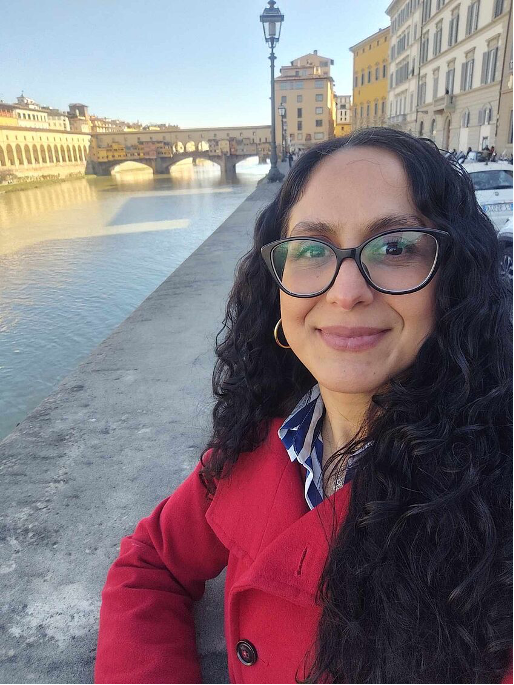
Ipek Demirsu Di Biase is a Research Fellow at the Scuola Normale Superiore, where she works on the Horizon Europe project CIDAPE (Climate, Inequality, and Democratic Action: The Force of Political Emotions). Her research within the project focuses on the Italian rural context, where she conducts go-along walking interviews with local farmers on their emotional responses to climate change, integrating ethnographic and narrative insights, alongside conducting deliberative focus groups on citizens’ perceptions of climate protests. As such, her contribution to the project lies in her experience and expertise in qualitative research methods. She previously served as a Postdoctoral Researcher at the University of Milan (2022–2025) focusing on youth futures and new forms of political engagement in Milan’s urban peripheries during a period marked by polycrisis.
She also worked as a TUBITAK Postdoctoral Fellow on the joint Sabancı University–KU Leuven project “Assessing Interdependence between the European Union and Turkey: Policies and Cooperation in Regional and Global Governance” (2015–2017), investigating political discourses around the so-called ‘refugee deal’. She holds a PhD in Social Sciences from the University of Padova, with a focus on social movements, urban space, and identity politics, and a PhD in Political Science from Sabancı University (Istanbul), where she investigated the intersection of human rights and security. She has also been a visiting researcher at the University of California, Santa Cruz (USA), and the University of Otago (New Zealand).
Her research spans social movements, youth political and civic participation, urban ethnography, migration studies, identity politics, and the tensions between security and human rights. She is the author of two monographs: Counter-terrorism and the Prospects of Human Rights: Securitizing Difference and Dissent (Palgrave Macmillan, 2017) and The Hostile City of Love and Antibodies of Hate: Urban Contestations of Identity and Belonging (Brill, 2024). In her work, she employs a wide range of qualitative methodologies, including discourse and frame analysis, ethnographic and participatory methods, qualitative and walking interviews, online ethnography, visual methods, focus groups, and other creative research approaches.
Journal Article - 2026
Journal Article - 2026
Journal Article - 2026
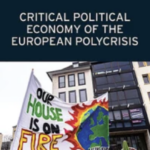
Edited Volume - 2026
Journal Article - 2026
Journal Article - 2026
Monograph - 2025
Journal Article - 2025
Journal Article - 2025